
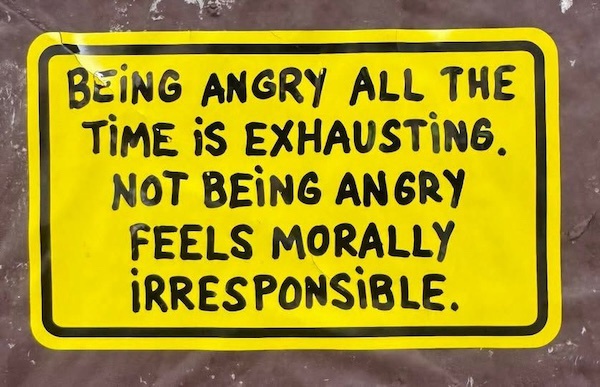
I have rewritten this post in different forms over the past few years, and the feeling behind it has not changed. I do not want to say things have gotten worse, but it often feels that way. I know how negative and pessimistic that sounds. I am simply allergic to bullshit.
Bullshit is against my personal religion, not to be confused with the organized one.
Harry G. Frankfurt’s On Bullshit is useful here. I find the book fascinating because it makes a distinction that matters. Bullshit is different from lying. A liar cares enough about the truth to deliberately contradict it. A bullshitter is mainly concerned with creating an impression, persuading, or achieving some other effect, and is largely indifferent to whether what they say is true or false.
There is too much of that in the part of my world I am writing about here: my job. Indifference to the truth often hides behind politeness, and that makes serious conversations about serious things harder.
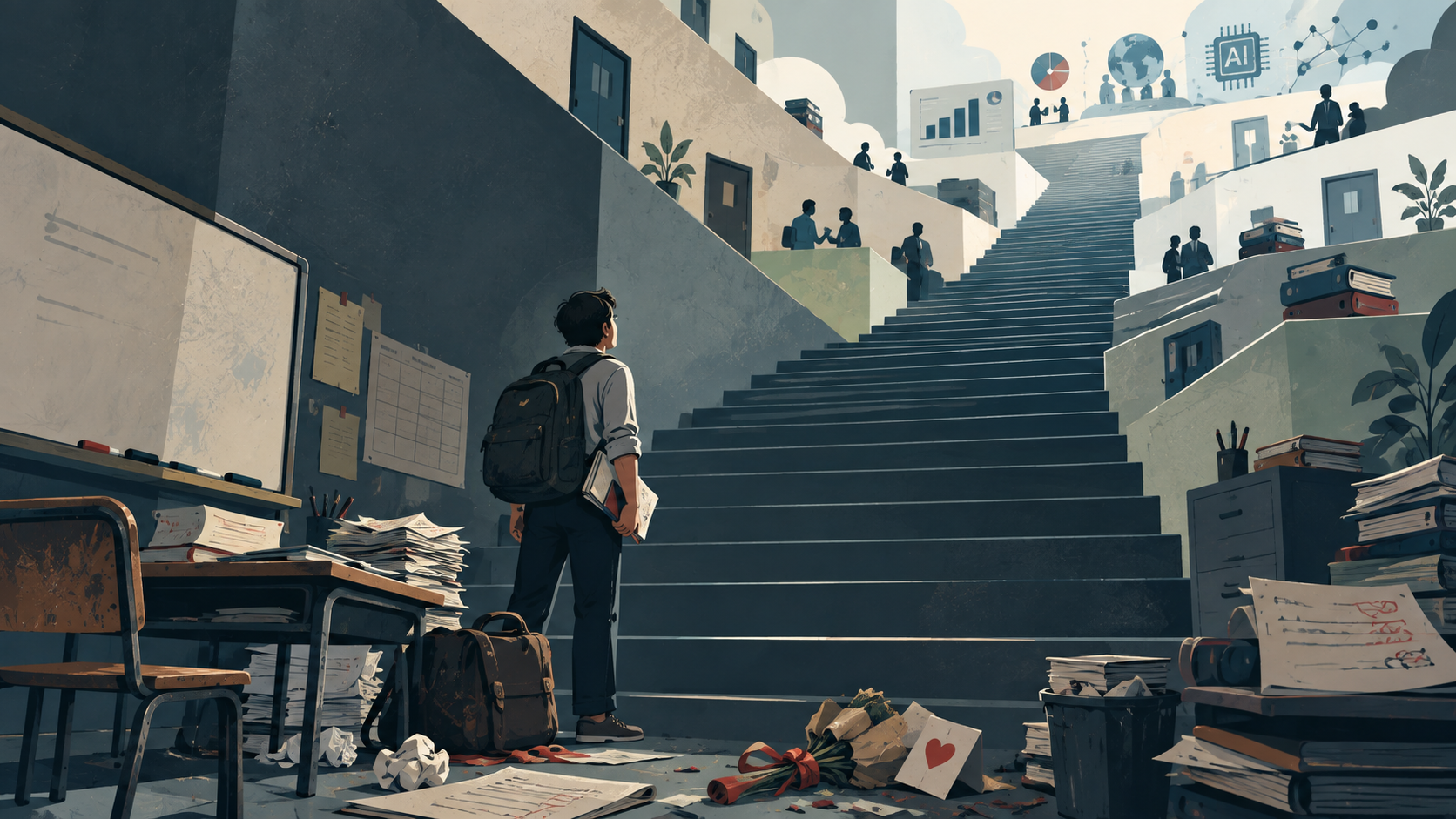
I am not interested in exaggerating the job to make the criticism sound sharper. It does not need exaggeration. The ordinary reality is enough: the hierarchy, the workload, the lack of autonomy, the bureaucratic language, and the distance between what is promised and what actually reaches the classroom.
October 5
I spare myself the performance: the speeches, the praise, the polite smiles nobody believes. They hide an ugly reality where neglect festers and the status quo is already rotten. A few years ago, I wrote about why I became a teacher, and I was considerably more hopeful about the answer. I described the burdens of the profession as tolerable, wrote about the satisfaction of helping someone understand something, and valued that small sense of achievement when a student finally gets there. A few weeks ago, I extended that answer by saying that I recharge my motivation through the achievement at the end rather than by enjoying every part of the process. Perhaps I was assuring the listener, and myself, that I still had the patience to see it through.
World Teachers’ Day was not even on my radar until a few years ago. When I found out about it, I laughed harder than I probably should have. Teachers deserve recognition. What made me laugh was how ordinary the day itself felt, and how predictable today will be. It goes by like any other day while speeches about respect, sacrifice, and the importance of teachers come from people who do absolutely nothing but worsen the conditions in which teachers actually work.
October 5 gives me a reason to revisit what I wrote before because I read some of those thoughts very differently now. Since joining the public sector, my relationship with the profession has become considerably more cynical. I regret parts of the path that brought me here, and I have known for a long time that I do not want to spend the rest of my working life doing exactly this.
I do not want to be compared to a prophet
There is a familiar line about teachers, repeated like a mantra in this part of the world. It asks people to rise for the teacher and show respect because the teacher is almost like a messenger or prophet.
I despise what that kind of praise does. I do not want religious symbolism inserted into a professional role, and putting teachers on a pedestal creates expectations that no actual human being can satisfy. No one has ever managed it. No organized religion on this planet has successfully made people better.
Teachers are expected to be endlessly patient, morally exemplary, self-sacrificing, emotionally available, knowledgeable, disciplined, inspiring, and somehow above the ordinary limitations of everyone else. We are not. Excellent teachers make mistakes. Bad teachers exist. Teachers need training, evaluation, criticism, professional development, and accountability like anyone else.
Teachers also have bills, families, private lives, limits, ambitions, and mortgages. Calling someone noble is considerably cheaper than paying them properly and on time.
The view from the bottom
I work at the bottom of a very large hierarchy. That is not self-pity. It is simply where classroom teachers sit, and I spend half the time explaining that to people.
Many decisions that affect the classroom are made by people I doubt have ever set foot in one.
Above the classroom are layers of administration, procedures, inspections, directives, reporting, and decisions made far away from the actual lesson taking place between a teacher and a room full of students. Schools obviously need administration, rules, and accountability. My frustration is with the distance between those layers and the work taking place below them.
Supervisors are part of that hierarchy, so I have one request: please spare us the bullshit. We know when a task is tedious, bureaucratic, repetitive, or simply something we are required to do. You know it too. There is no need to dress it up with hollow platitudes about commitment, noble missions, professional growth, or whatever language makes an instruction sound more profound than it is.
I have had supervisors and never had any real problem with them. My frustration begins when the job itself, or some ordinary task attached to it, gets unnecessarily sugar-coated. Tell us exactly what you expect, why you expect it, what the standard is, and when it needs to be done. I respect that far more than being handed an obligation wrapped in motivational language. We both understand what the job is. Cutting the crap would make the relationship more professional.
Since 2021, I have spent enough time in the system to lose much of the romanticism I once had about it. The work is draining, repetitive, and strangely cyclical. You solve one problem and meet it again in another form. One school year ends, and the next begins with many of the same structural problems waiting for you.
Sisyphus had his punishment. Educators get sugar-coated bullshit promises about change.
I have barely talked about learners or students so far. They have less institutional power, their behavior is shaped by incentives and conditions, and many of them are still developing. Teachers are often forced to absorb failures that originate elsewhere in the system.
Blaming students can also obscure responsibility higher up the chain, including the responsibility of their parents. More importantly, students did not design the teacher’s working conditions. They actually suffer because of them.
They still need to be held responsible for their behavior and face consequences when appropriate. Accountability matters. Holding someone responsible for what they do, however, is different from blaming them for problems they did not create.
The same applies to teachers. We often work within rules we did not create and under limits on professional autonomy that matter in practice. Deskilling is structural, and compliance does not imply endorsement. We sometimes follow rules we disagree with because challenging every one of them creates unnecessary friction. When institutions constrain professional judgment, every classroom failure cannot automatically be treated as a failure of the teacher.
And now we are talking about artificial intelligence
And for some reason, officials are talking about artificial intelligence and how it can save the day. They hold meetings and workshops, spend money, take group photos, pat one another on the back, and applaud each other’s speeches.
A few weeks ago, I had to answer a question about integrating technology into the classroom. I could not laugh at the question because it was genuine, but it was still a funny question to be asked.
I build educational tools, run a Learning Hub for my students, and have built a language placement test. I would like to use technology more meaningfully in my work. The problem is not the question itself. It is the gap between that conversation and the classroom I actually work in.
In 2026, Morocco is openly discussing artificial intelligence as part of education reform and digital transformation. Versions of that promise have been discussed for as long as I can remember, and I am still waiting for them alongside Vladimir and Estragon.
Perhaps some of it will eventually produce something useful. The classroom often starts much further back.
Digital literacy and access remain uneven. Devices and internet connections remain problems. Something as ordinary as logging into a service, understanding an error message, remembering account information, or recognizing whether a problem comes from a website, a browser, a phone, or the connection can become an obstacle.
I encounter these problems while using software I built specifically to be simple. When the conversation jumps directly to AI, I wonder what happened to all the steps in between.
I use AI myself, so blanket opposition would be absurd. I object to bullshit claims about the world I actually work in.
The classroom absorbs everything
Almost every unresolved problem eventually reaches the classroom: problems at home, social media, economic pressure, digital illiteracy, poor literacy, behavioral problems, and administrative decisions.
The teacher is then expected to convert all of it into a lesson.
I have taught classes crowded enough that individual attention becomes almost theoretical. I have encountered students with gaps so fundamental that anger at the student would make no sense. If someone has spent years moving through a system without acquiring something basic, the interesting question is how everybody involved managed to let them arrive there.
Students are capable of terrible behavior. Teachers deal with insults, false accusations, threats, disruption, vandalism, and situations that go far beyond someone whispering at the back of the room. Students are still students, though, and they did not design the system.
The classroom is where failures from everywhere else meet, and the person standing at the front is expected to continue with Unit 3.
What the job actually asks for
There is another part of teaching that does not fit neatly into ceremonial speeches: the job follows you home.
Planning, correcting, materials, and unresolved problems follow you there. Teachers often spend their own money on things they need to do the job. There is not always a proper workspace available when the lesson ends, so the work simply moves somewhere else.
The less visible parts follow too: dealing with a difficult student without making things worse, wondering whether a complaint will become something larger, navigating administrative expectations, and returning the next morning knowing that most of yesterday’s problems have not disappeared.
My earlier description of these burdens as “tolerable” now feels naive.
Some days are fine. Some classes are good. Some students remind me why I entered teaching in the first place. I have learned a great deal from classrooms and met teachers whose intelligence, generosity, humor, and professionalism I deeply respect. Those things are real, and so is the exhaustion. One does not cancel out the other.
Respect is cheap
What bothers me about World Teachers’ Day is what tends to surround it.
UNESCO describes the day as an opportunity to consider the support teachers need and the future of the profession alongside the celebration itself. The support interests me much more than the celebration.
I do not need teaching to be described as sacred, teachers to be compared to prophets, or another speech about sacrifice, noble missions, candles lighting the way for future generations, and all the other metaphors people reach for when talking about the profession.
Treat teaching like a profession: train people properly, give them useful professional development and the tools required to do the job, protect them when serious problems occur, pay what they are owed without making them wait years for it, and create working conditions in which doing good work does not require constantly compensating for what the institution failed to provide.
Then evaluate teachers honestly. Professional respect includes admitting that teachers can be wrong, ineffective, unprepared, or simply bad at their jobs.
The rock is still there
My tone is very different from the one I used when I first wrote about becoming a teacher. My experience changed, and so did I.
I am not claiming that every teacher in Morocco feels the same way. I am also deliberately keeping individual people and institutions out of this account. This is my experience of the profession from where I happen to stand inside it.
There are still things I value. The classroom has taught me things about people that no training course ever could, and other teachers have become part of a community I would never have encountered otherwise. Sometimes a student understands, someone improves, or a lesson goes exactly where you hoped it would go.
Those moments matter without erasing everything around them.
On World Teachers’ Day, I have no inspirational message to offer. Teachers are people doing a job, not prophets, martyrs, or slogans. Treat them like people doing a job, because the next morning the rock will still be waiting.
Related Reading
This post follows an earlier piece I wrote several years ago about why I became a teacher.
It also connects with my more recent writing on School Phone Bans Are Not a Shortcut Back to Attention, as well as Recent Updates & Additions to Project English, where I wrote about digital literacy, educational technology, and the gap between policy ambitions and what actually reaches the classroom.