
The appeal of a lie is immediate
A lie usually begins as a small solution to a specific problem. It helps avoid blame, soften a mistake, protect an image, escape embarrassment, or delay a difficult conversation. In that moment, it can feel efficient. It replaces discomfort with control. It makes the immediate situation easier to manage.
This is why people lie. Not always out of cruelty, and not always because they enjoy deception. Often, the truth feels costly. It may expose something, damage an image, create conflict, or force a person to face consequences they are not ready to face.
So the lie appears as a shortcut.
But the shortcut does not end where it begins. A lie may solve one moment, but it creates another problem that continues after the words have been spoken.
A lie creates a second reality
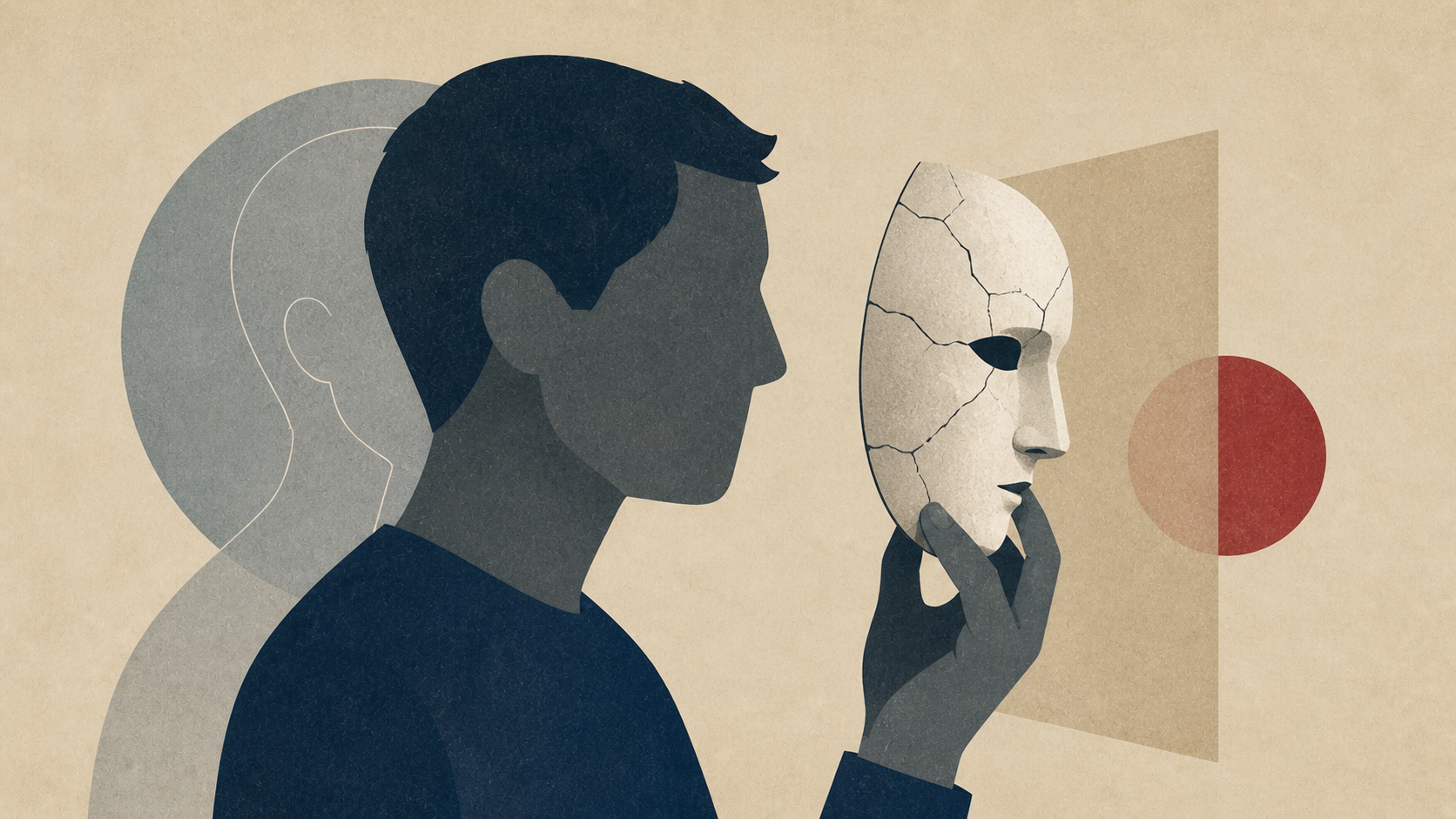
The moment a lie is told, reality splits into two versions. There is what actually happened, and there is what has been said. From that point on, both versions have to be carried.
This is the real weight of lying. The lie is not just a sentence. It becomes a structure. It needs support. It must be remembered, repeated, defended, adjusted, and protected from contradiction.
The person who lies now has to keep track of what was said, who heard it, what details were included, and what must not be mentioned later. What looked like control becomes maintenance.
A lie does not simply hide the truth. It creates a replacement for it, and replacements need constant care.
The different ways people lie
Not all lies look the same. Some are direct. Some are hidden inside silence. Some do not invent anything, but arrange the truth in a way that leads someone to the wrong conclusion. The ethics and impact of a lie depend partly on its form.
A direct lie is the clearest version: someone says something they know is false. It replaces reality with a statement that contradicts it. This kind of lie is easy to name because the falsehood is explicit.
Lying by omission works differently. Nothing false may be said, but something important is deliberately withheld. The listener is allowed to form a false understanding because a necessary part of the truth has been removed. This can be harder to challenge because the liar can hide behind what was technically said.
There is also distortion. This happens when true details are selected, exaggerated, minimized, or arranged to create a misleading impression. The facts may be present, but their proportions are wrong. A mistake is made to look accidental. A pattern is made to look like an exception. A serious act is made to sound trivial.
Then there is performance: the use of tone, surprise, innocence, confusion, or emotional display to steer how the lie is received. This is where lying becomes more than information. It becomes theatre. The aim is not only to change what someone knows, but to shape what they feel while hearing it.
These forms differ, but they share the same basic effect: they interfere with another person’s access to reality. They make someone respond not to what is true, but to what has been constructed, hidden, softened, or staged for them.
The ethics change with the type of lie
The usual question is whether lying is wrong. A better question is what kind of lie it is, what it protects, what it damages, and who loses the ability to choose freely because of it.
Some lies are defensive. They are used to avoid shame, punishment, conflict, or exposure. Some are protective, meant to spare another person pain or preserve privacy. Some are manipulative, designed to control another person’s decisions. Some are social, used to smooth small interactions. Some are institutional, repeated by groups, companies, or governments until falsehood becomes policy.
These categories are not equally harmful. A small social lie does not carry the same weight as a lie that destroys trust, hides abuse, manipulates consent, or changes another person’s future. But even small lies show the same structure: someone controls information so that someone else will see less than they should.
This is where the ethics of lying becomes serious. The harm is not only that truth is broken. The harm is that another person’s judgment is quietly redirected.
The problem is what comes after
After the lie, life keeps moving.
People ask questions. Details shift. Someone remembers something differently. A new fact appears. A conversation returns to the same subject weeks later. A small inconsistency begins to stand out.
At that point, the lie has to adapt. It may become more detailed, more vague, more defensive, or more complicated. Each adjustment creates new risk because every added detail has to fit the version already given.
This is why lies often collapse over time. Not because they are always immediately exposed, but because they are unstable. They have to survive contact with memory, evidence, other people, and ordinary chance.
The truth may be difficult, but it is not fragile in the same way. It does not need choreography.
Lying changes the person who lies
A lie does not stay outside the person who tells it. It begins to shape attention.
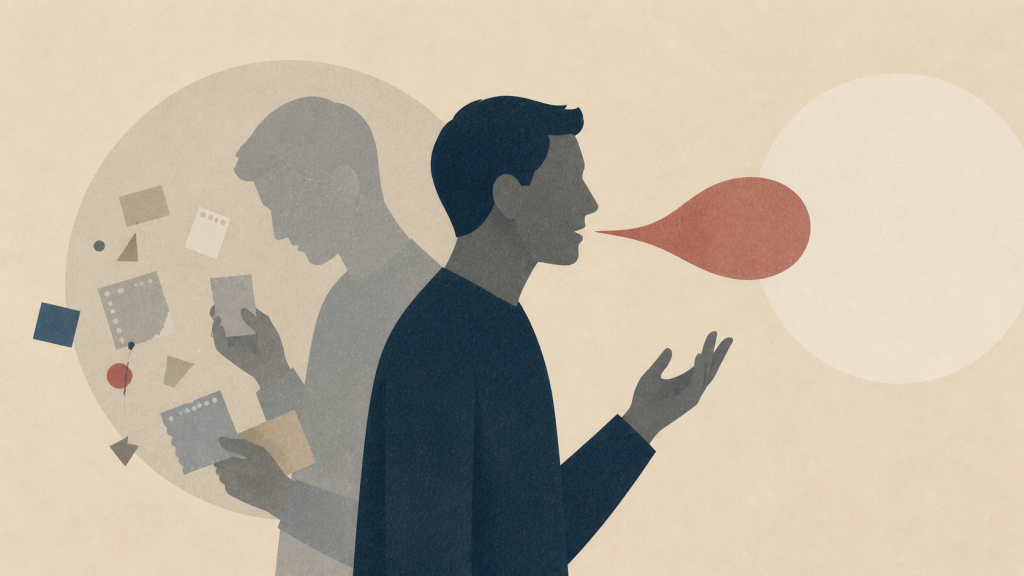
At first, there may be tension or hesitation. The person knows the difference between what happened and what was said. But if the lie continues, attention begins to divide. Part of the mind stays inside the conversation. Another part watches the story from the outside, checking for danger.
Did I say that before? Did I mention this detail? Does this version match the last one? Who knows what?
Conversation becomes less like communication and more like management. Memory becomes surveillance. The person is no longer only speaking. They are monitoring.
This is one of the hidden costs of lying. It changes the relationship between a person and their own speech. Words stop being simple expressions and become things that must be controlled.
Lying changes the person being lied to
A lie also changes the position of the person receiving it. They are no longer responding to reality as it is. They are responding to a version that has been constructed for them.
Their understanding, decisions, emotions, and reactions are shaped by incomplete or false information. They may forgive something they would not have forgiven. They may trust something they would have questioned. They may make choices they would not have made if they had been allowed to see the situation clearly.
This is what makes lying more than a private act. It alters another person’s access to reality. It narrows what they are able to know, and therefore what they are able to choose.
In that sense, lying is not only about hiding something. It is about controlling the conditions under which someone else responds.
Truth is heavier at first, but lighter later
The truth can be difficult to say. It may expose a mistake, create conflict, disappoint someone, or damage an image. That is why lying often feels easier.
But truth has one advantage lies do not have: it does not require maintenance.
Once spoken, the truth can be repeated without adjustment. It may have consequences, but those consequences belong to the thing itself. A lie delays the cost and spreads it into the future. It creates new decisions: whether to keep going, confess, modify the story, or build another lie around the first.
The truth concentrates the difficulty. A lie extends it.
That does not mean truth is always simple, painless, or safe. It means that truth does not demand the same ongoing construction. It stands without needing to be protected from reality.
Silence is different from lying
Not every situation requires full disclosure. Privacy matters. Timing matters. Some truths belong to the person who carries them, and not every question deserves an answer.
But silence is not the same as lying.
Choosing not to answer, saying “I am not ready to talk about that,” or setting a boundary does not create a false reality. It may withhold information, but it does not replace what is real with something invented.
A lie does something different. It gives another person a false version to live inside.
That distinction matters. Silence can protect privacy. Lying manipulates what is known.
Why lies stay with you
A lie rarely disappears after serving its first purpose. It stays connected to future conversations, future decisions, and future relationships. It can return through memory, through contradiction, through discovery, or simply through the effort required to keep it alive.
This is why one lie can grow beyond its original size. It attaches itself to other statements. It demands supporting explanations. It forces the person who told it to manage not only what happened, but what other people believe happened.
What began as a moment becomes an obligation.
What remains
A lie can solve a problem in the moment, but it creates another one that does not end as quickly. It replaces one difficulty with an ongoing responsibility. It asks to be remembered. It asks to be defended. It asks for more language, more caution, and more distance from the people it was meant to manage.
The truth may be heavier at first, but it does not require this continuation. It does not need to be rehearsed against itself. It does not have to be kept alive by future choices.
That is the real difference.
A lie asks to be maintained. The truth does not.