
A message can still mean something
A message can still matter.
A text before an exam. A reminder from someone who cares. A few words arriving at the right moment, just enough to soften a difficult day. Technology can do that. It can shorten distance, carry affection, and make someone feel remembered.
That is why the problem is not the phone itself. It would be too easy to blame the device and ignore the way we use it. The same screen that distracts us can also bring someone closer. The same notification that interrupts a conversation can also tell us that someone is safe, waiting, worried, or thinking of us.
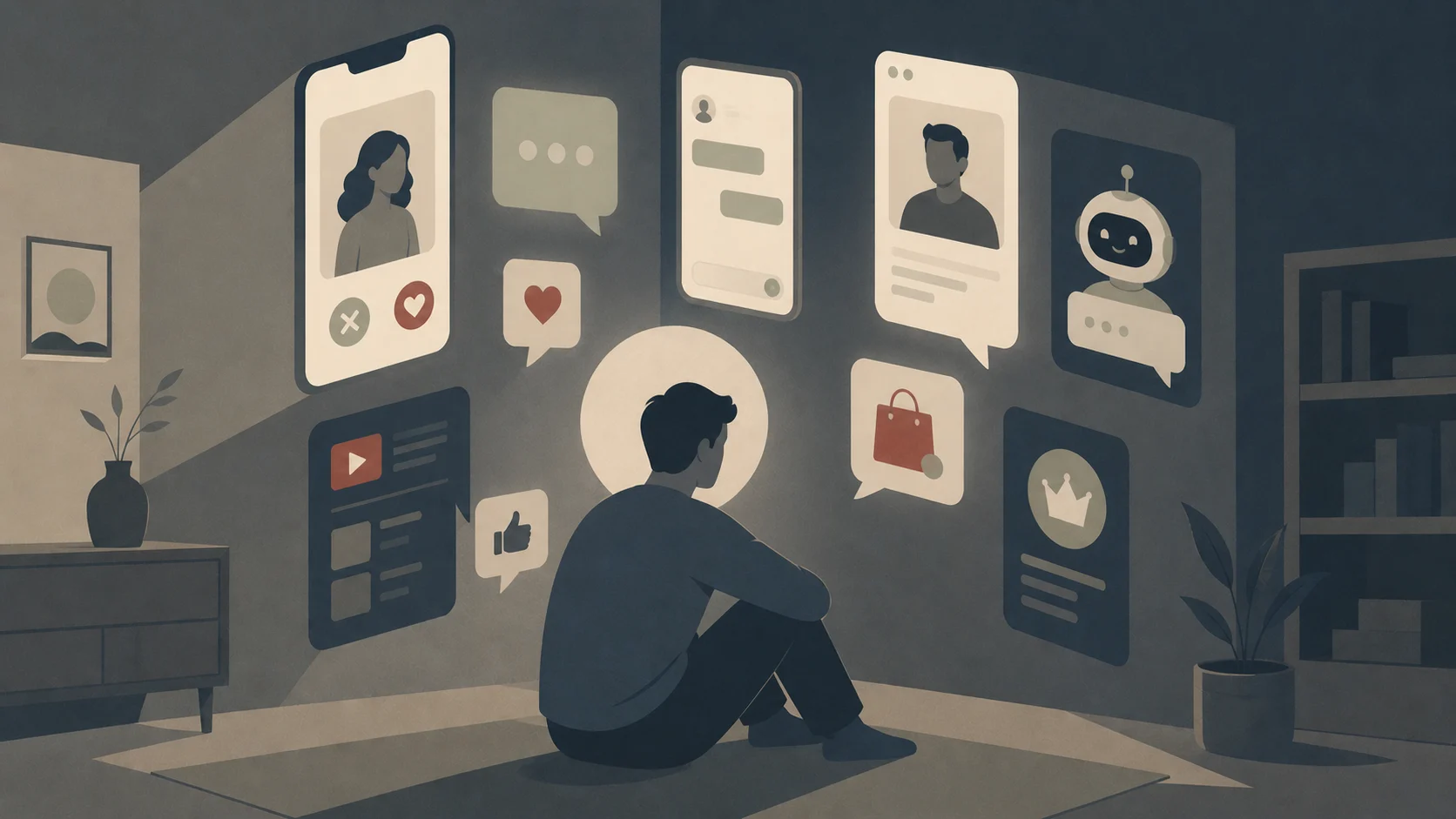
The problem begins when connection becomes constant, but presence becomes rare.
What begins as a bridge can become an interruption. What begins as comfort can become noise. What begins as a way to reach people can quietly become a way to avoid being fully with them.
We are more connected than before, but not always more present.
The problem is the attention it trains
Technology changes attention before it changes relationships.
We now live with constant access: messages, posts, emails, updates, calls, comments, notifications. Everything arrives at once, and everything asks for a response. At first, this feels like freedom. We can speak to anyone, be reached anywhere, and follow conversations, classes, news, friends, and strangers from a single screen.
But constant access has a cost.
A teacher speaks, and the phone glows. A friend talks, and the mind waits for the next notification. A family sits together, but each person is elsewhere. The body remains in the room, but attention leaves.
This is one of the quiet changes technology has made. It has separated physical presence from mental presence. We can sit beside someone and still be unavailable. We can answer every message and still fail to listen to the person in front of us.
The room is no longer enough to hold us.
Connection without presence
Digital communication gives us control.
We can edit a message, delete a sentence, delay a reply, polish a thought, choose an image, mute a conversation, or leave without the awkwardness of physically leaving. We can present a cleaner version of ourselves and avoid the parts of speech that make us vulnerable: hesitation, confusion, silence, tone, expression, and interruption.
Real conversation does not work that way.
It happens in real time. It includes pauses that cannot be edited, facial expressions that arrive before we approve them, and sentences that may come out imperfectly. It asks us to be present before we are fully ready.
That is why conversation can feel uncomfortable. But that discomfort is also where intimacy lives.
A relationship deepens not only through clear statements, but through the strange material of being together: the pause before an answer, the look that changes a sentence, the mistake that becomes a joke, the silence that does not need to be filled.
When we avoid that too often, relationships become thinner. We exchange information, but not presence. We maintain contact, but lose closeness.
Why conversation matters
A conversation is not just the transfer of words.
It teaches patience. It teaches listening. It teaches us how to read another person beyond what they say. It teaches us how to sit with uncertainty, how to repair misunderstanding, and how to face ourselves when we cannot edit, polish, or escape.
Texting, posting, and messaging can support relationships. They can keep care alive across distance. But they cannot replace the full experience of sitting with someone and allowing the moment to unfold.
The face matters. The voice matters. The pause matters. The awkward sentence matters.
These are not defects in communication. They are part of it.
A world that removes every awkward moment does not create better intimacy. It creates smoother distance.
The quiet escape
There is another danger: we may begin to prefer controlled connection because real people are difficult.
People misunderstand. They interrupt. They disappoint. They need time. They ask for patience. They do not always respond when or how we want. Machines are easier. Screens are easier. A message can wait. A feed does not ask to be understood. A device offers response without the full demand of relationship.
That comfort is tempting.
A screen can give us the feeling of company while protecting us from the risk of intimacy. It offers contact without the inconvenience of another person’s full presence. It lets us reach outward while remaining protected from too much exposure.
But if we only choose conversations we can control, we become less able to live with the ones we cannot.
The problem is not that technology gives us control. The problem is that too much control can make ordinary human presence feel unbearable.
What we lose
The loss does not happen all at once.
We lose patience with silence. We lose comfort with eye contact. We lose the ability to listen fully. We lose the courage to speak imperfectly. We lose the habit of being alone with our own thoughts.
Every empty moment can now be filled. Waiting no longer has to mean thinking. Sitting alone no longer has to mean reflecting. Discomfort can be interrupted immediately by a screen.
That sounds like relief, and sometimes it is. But it also means that boredom, silence, and solitude — the spaces where thought often begins — are treated as problems to be solved.
The phone rescues us from boredom, but it may also rescue us from ourselves.
That is not always connection.
Sometimes it is avoidance.
Returning to the room
The answer is not to reject technology. It is already part of how we live, work, learn, and stay close. The question is whether we still know how to return from it.
Can we sit with someone without checking the phone? Can we let a conversation happen without controlling it? Can we be silent without reaching for a screen? Can we answer later and still feel calm?
These are small questions, but they matter because presence is built in small acts. Looking up. Waiting. Listening. Letting a sentence finish. Allowing silence to sit between people without rushing to cover it.
Technology should help us reach people. It should not teach us how to disappear from them.
We do not only need more connection. We need more presence.
Being connected is easy now.
Being truly with someone is harder.
And that is exactly why it still matters.
source Note
Originally published Aug, 15, 2012