
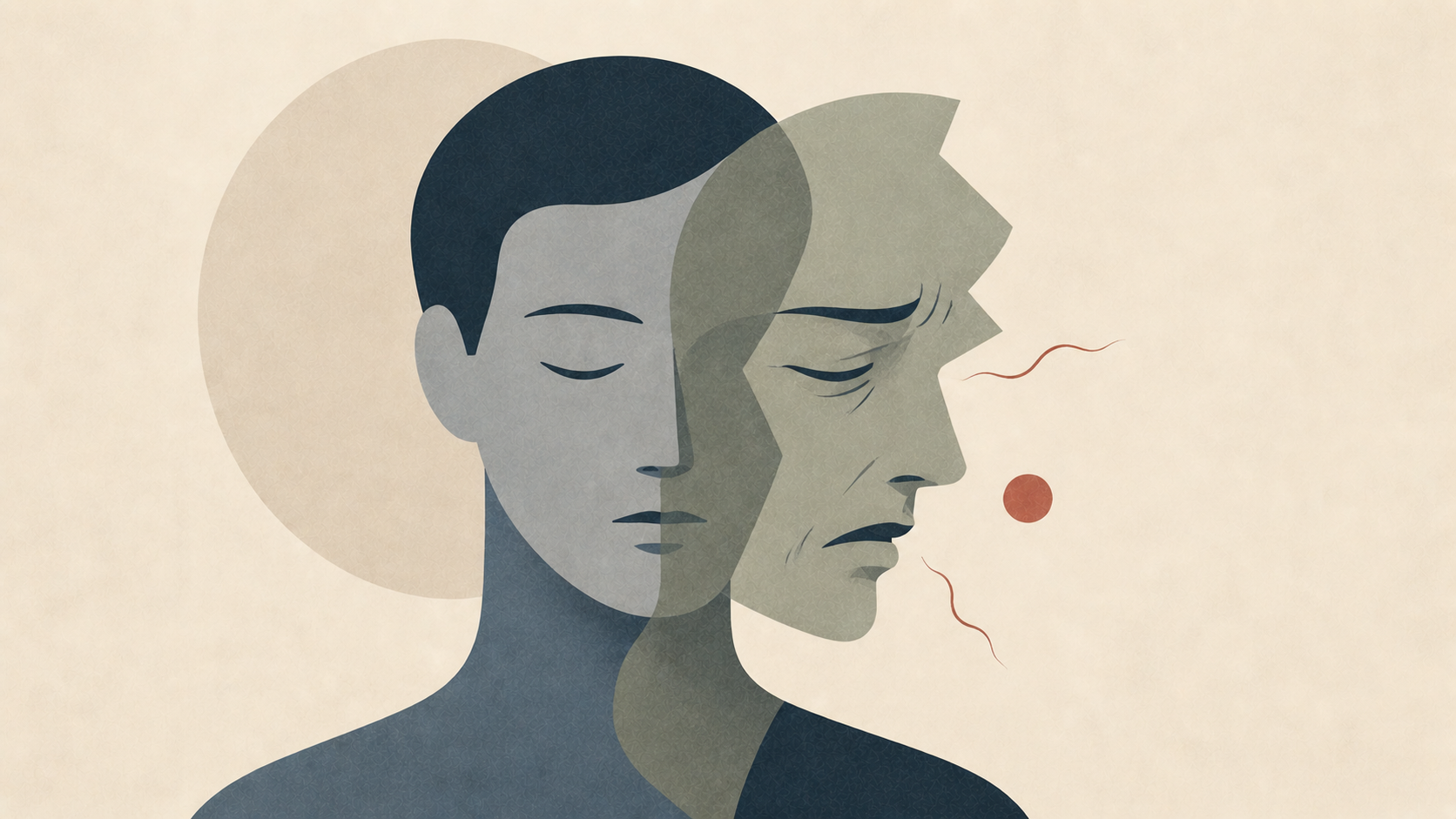
This is not a manual for deception
Before anything else, this needs to be clear: this is not a guide to becoming a better liar.
It may seem close to that at first, because understanding deception requires looking at how lies are built, delivered, protected, and repeated. But the purpose is not manipulation. The purpose is recognition.
A lie is rarely just a false sentence. It is usually a small performance arranged around a desired effect. It has timing, tone, memory, omission, and control. Sometimes it hides behind too much detail. Sometimes it hides behind almost none. Sometimes it comes dressed as honesty because a small truth has been offered to protect a larger falsehood.
To understand deception, we need to stop imagining lying as one dramatic moment when someone looks away, sweats, or stumbles. Real deception is often quieter. It can look calm. It can sound prepared. It can even appear reasonable.
That is why detecting deception depends less on one obvious sign and more on context.
What a lie looks like before it is spoken
A lie often begins before the person opens their mouth.
It begins in the calculation of what needs to be hidden, what can be admitted, and what version of events will sound believable. A person preparing to lie does not always invent a completely new reality. More often, they keep as much truth as possible and move one important piece out of place.
That is what makes many lies difficult to detect. They are not pure fiction. They are rearranged reality.
The story may include a real location, a real conversation, a real time, a real person. The falsehood sits inside those truths like a replaced tile in a familiar floor. At first glance, everything seems continuous. Only later does the mismatch become visible.
A lie, before it is spoken, is usually an edit.
The structure of a believable lie
The most believable lies tend to stay close to what actually happened. They do not create a whole new world unless they have to. They borrow reality because reality gives them weight.
This is why a deceptive story may sound convincing at first. It has names, places, ordinary details, and a natural sequence. It may not feel invented because much of it is not invented.
But something in the story resists inspection. A detail is vague where it should be clear. A motive is overexplained. A simple question produces a careful answer. The story moves forward, but it avoids certain rooms.
This is where listening matters. A believable lie often has structure, but not depth. It can survive the first telling because it was designed for that moment. It becomes weaker when the listener asks for context, sequence, or connection.
Why detection depends on context
No single behavior proves that someone is lying.
A nervous person may be telling the truth. A calm person may be lying. Someone may avoid eye contact because they are ashamed, anxious, tired, culturally reserved, or simply uncomfortable. Someone may give too many details because they are honest and precise, not because they are fabricating. Someone may hesitate because memory is imperfect, not because deception is happening.
This is why simple “signs of lying” are often misleading. Deception cannot be read like a checklist. It has to be compared against the person, the situation, the stakes, and the pattern.
Context asks better questions. Is this person usually expressive, but suddenly flat? Are they normally direct, but now unusually vague? Does the story change only when pressure appears? Are they answering the question, or answering around it? Are the details helping the account, or distracting from what matters?
Detection is not about catching one twitch. It is about noticing when behavior, story, emotion, and context stop fitting together.
The face is not enough
People often look for lies in the face: the eyes, the smile, the mouth, the delay before a reaction.
There is a reason for this. The face carries emotion quickly. A lie can create tension around it. The smile may arrive too late. Surprise may appear too large. Calm may look polished rather than natural. The mouth may say certainty while the eyes keep checking the room.
But the face is also dangerous evidence because faces are noisy. Anxiety, fear, social pressure, shame, grief, fatigue, and embarrassment can all distort expression. A person under accusation may look guilty because accusation itself changes the body.
So facial expression matters, but only as part of a larger pattern. The question is not, “Did their face move strangely?” The question is, “Does the emotion fit the moment, the person, and the story?”
A real reaction is often uneven. It arrives with small imperfections. Performed emotion may feel too neat, too timed, too complete. But even that is not proof. It is only a reason to pay closer attention.
Details can reveal or conceal
Details are one of the strange territories of deception.
A story with no detail can feel empty. A story with too much detail can feel staged. The problem is not the amount alone, but the function of the details.
In an honest memory, details often appear unevenly. Some parts are vivid. Others are missing. A person may remember the weather but not the exact time, the tone of a sentence but not the order of every event. Memory is not a camera. It is selective and human.
A deceptive account may use details differently. Small facts may be placed like props: a street name, a cup on the table, a casual remark, an unnecessary time stamp. These details are meant to make the story feel lived-in. Sometimes they do. But when details are too polished, too balanced, or too conveniently placed, they can begin to feel less like memory and more like scenery.
The question is not whether details exist. The question is whether they behave like memory or decoration.
Selective truth can be harder to see than a lie
The most effective deception is not always a direct falsehood. Sometimes it is selective truth.
A person may admit something small to seem honest while hiding something larger. They may confess to the harmless part of the story so the listener stops looking for the harmful part. They may answer a narrow question truthfully while avoiding the larger question entirely.
This kind of deception is difficult because it gives the listener something real. The truth becomes a shield. It creates the feeling of transparency while keeping the most important information out of view.
This is why detecting deception requires attention to what is missing. What question keeps being avoided? What part of the timeline remains untouched? What does the person emphasize too quickly? What does the story invite you not to ask?
Sometimes the lie is not in the sentence. It is in the gap the sentence protects.
Playing confused can lower suspicion
Confusion can be real. People forget, misunderstand, panic, or fail to explain themselves clearly. Not every confused answer is deception.
But confusion can also be used as cover.
A person may appear uncertain in a way that lowers expectations. They may act as if they are too scattered, too overwhelmed, or too careless to have constructed anything deliberate. The performance says: I could not have planned this.
This can work because people often associate deception with intelligence and control. If someone looks clumsy enough, suspicion may soften. But again, the key is context. Is the confusion consistent with the person and situation, or does it appear only around the dangerous part of the story? Does it clarify with time, or does it expand whenever the questions become more precise?
Real confusion usually wants help finding clarity. Performed confusion often avoids it.
Indifference can be a performance too
Defensiveness can raise suspicion, so some people choose the opposite posture: indifference.
They answer calmly. They shrug. They seem almost bored by the accusation or question. They may act as if belief does not matter, as if the listener’s doubt is embarrassing or excessive.
This can shift pressure onto the person asking questions. The listener begins to wonder whether suspicion itself is the problem.
Genuine indifference has a certain looseness to it. Performed indifference often feels slightly detached from the stakes of the situation. The person is calm, but the calm has edges. It does not grow naturally from the moment; it sits on top of it.
Still, indifference alone proves nothing. Some people become calm under pressure. Some shut down emotionally when stressed. What matters is whether the calm fits the person, the stakes, and the rest of the account.
The burden of consistency
The most difficult part of lying is not always the first statement. It is everything that follows.
A lie must remain stable across time, conversations, moods, and audiences. It must survive being retold. It must survive unexpected questions. It must survive someone else remembering a different detail.
This is where many lies weaken. Not immediately, but gradually.
The first telling may be smooth because it was prepared. The second may still hold. The third begins to drift. A phrase changes. A time shifts. A reason becomes more dramatic. A forgotten detail suddenly appears. The story does not collapse all at once; it frays.
Detection often depends on patience rather than confrontation. A lie may defend itself well in the moment, but struggle against time.
What this reveals
Understanding deception changes how we listen.
It teaches us not to trust clichés. A liar does not always look nervous. A truthful person does not always look calm. A detailed story is not always honest. A vague story is not always false. A confident answer is not always reliable.
The better question is whether the story, emotion, timing, and context support one another.
This does not mean treating everyone as suspicious. That would destroy trust in a different way. It means listening with more care. It means noticing when a story becomes too smooth, when emotion arrives too neatly, when confusion appears only where clarity is needed, when a small truth is used to block a larger one.
A lie is not just something spoken. It is something arranged.
And because it is arranged, it leaves pressure marks: in timing, in structure, in avoidance, in memory, and in the distance between what is said and what the situation asks for.