
Grammar was never the problem
Why are so many important things introduced as if they were boring?
Not because they are empty. Usually, the opposite is true. Important things become boring when they are separated from their purpose. We meet them as tasks before we understand their use. We memorize names, follow rules, repeat definitions, and avoid mistakes before anyone shows us what the thing actually does.
Grammar suffers from this more than most subjects. For many learners, it appears first as correction: something to get wrong, something marked in red, something tied to embarrassment rather than understanding. It becomes a list of labels before it becomes a way to make meaning.
But grammar is not a decorative subject added to language after the important work is done. Grammar is the important work. It allows language to function. Without grammar, words do not become freer. They become loose signals. What we lose is not formality, but clarity.
Grammar gives words relation, direction, and force. It shows who did what, what changed, what matters, what is hidden, and what is being asked of the reader or listener. It is the difference between words placed beside each other and words made to mean something together.
Grammar exists before we learn its names
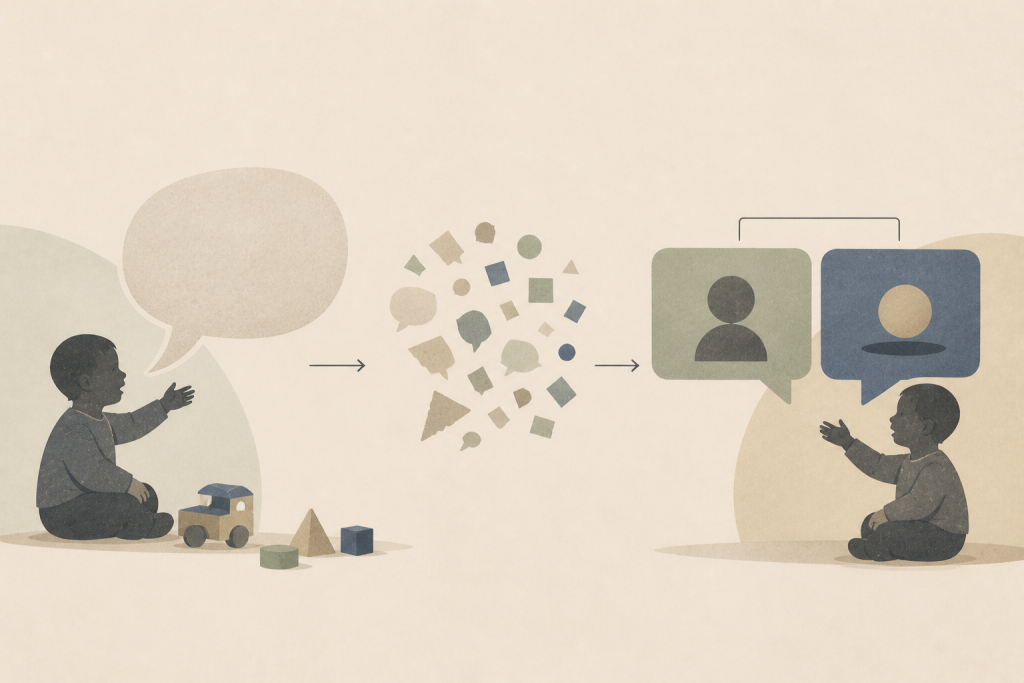
Long before anyone learns the word grammar, they are already using it. A child does not need to define subject, verb, object, or preposition to know that order matters. A child does not need a grammar book to understand that tone can turn one word into a request, a question, or a refusal.
In early speech, a single word can carry the weight of a whole sentence. A child saying “Push” may mean “Push me,” “Push the toy,” or “I want you to push this.” The word alone is not enough. Meaning comes from context, gesture, pitch, and shared attention.
Then structure begins to grow. One word becomes two. “Baby cry.” “Dada gone.” “You push.” Suddenly, the child is not just naming the world. The child is organizing it. Someone does something. Something happens to someone. A sentence begins to appear.
This changes how we think about grammar. It is not something added to thought after the fact. It is part of how thought becomes shareable. Before grammar is a school subject, it is a human instinct for making sense.
Words need relation
Words by themselves do not create meaning. They need relation. Place a few action words next to each other — runs sleeps walks — and there is motion, but no clear scene. Nothing is anchored. We do not know who acts, what happens first, or what the words are doing together.
Add structure, and meaning begins.
The child cries.
Now there is someone and there is an action. Add one more element, and the meaning changes again.
The child cries in the dark.
Now there is context. Atmosphere enters. A simple sentence becomes a small scene. This is what grammar does: it tells words how to relate, where to point, and what work to do. It does not decorate meaning. It produces it.
Grammar shapes what we notice
Once we see that grammar produces meaning, we can also see that it shapes attention. The way a sentence is built determines how it is understood. It decides what is emphasized, what is hidden, and what feels important.
Compare these two sentences:
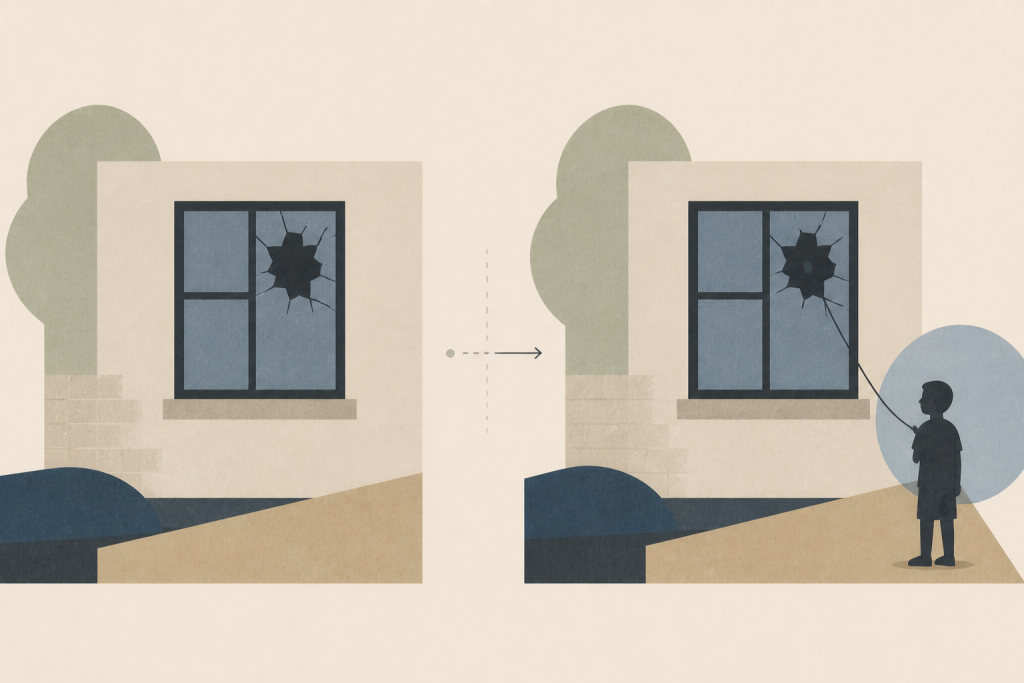
The mistake was made.
You made the mistake.
Both are grammatical. They describe the same general event. But they do not do the same work. The first removes the actor. The second assigns responsibility. That difference is not cosmetic. It is meaning.
This is why grammar matters outside the classroom. It can soften blame, hide responsibility, create distance, sharpen accusation, or make a claim feel more direct. The passive voice is not wrong by itself. Sometimes it is useful. But it becomes powerful when we understand what it does. A sentence is never only a container for information. It is also a choice about focus.
Why grammar was made to feel lifeless
This brings us back to the opening problem: important things become boring when they are separated from what they are for. Naming a clause, tense, or preposition can be useful, but only if learners understand what that structure is doing. Otherwise, grammar becomes labeling. A sentence turns into an object to dissect instead of a tool to use.
Part of the problem is historical. For centuries, English grammar was often explained through Latin. Latin depends heavily on word endings. English depends far more on word order. Forcing English into a Latin-shaped model created rules that sounded elegant but did not always match how English works.
This is where many famous “rules” come from: do not end a sentence with a preposition, do not split an infinitive, do not begin with this or that. Some were stylistic preferences. Some were teaching shortcuts. Some were attempts to make English behave like a different language.
The result was predictable: grammar began to feel like a museum of prohibitions. It was framed as restriction before it was explained as meaning. But English is not Latin with fewer endings. Its grammar lives in order, emphasis, rhythm, connection, and use.
Structure and use belong together
A better way to understand grammar is to see it as two things at once: structure and use.
Structure asks: how is the sentence built?
Use asks: why is it built that way?
Both matter. A sentence can be structurally correct and still weak, unclear, evasive, awkward, or unsuitable. Another sentence can break a schoolroom expectation and still work because it fits the purpose.
This is where grammar becomes practical. It helps us see why one sentence feels direct and another feels careful. Why one version sounds formal and another sounds intimate. Why one structure creates suspense while another creates clarity. Grammar is not only about avoiding mistakes. It is about understanding effect.
Grammar gives us control
Knowing grammar does not mean speaking perfectly. It means knowing what your sentence is doing. It means recognizing when something is unclear and being able to fix it. It means knowing how to emphasize one idea over another. It means seeing when a sentence hides responsibility, weakens a claim, or forces attention onto the wrong part of the message.
English has useful habits that help with this. One is end-weight: longer or heavier information often works better near the end of a sentence. Another is order-of-mention: events are easier to follow when they are mentioned in the order they happen. These are not decorative details. They affect comprehension.
A sentence can make the reader work with you, or against you. Grammar is how you control that load. It gives language direction without turning it into a cage.
Why grammar still matters
We produce more language now than at any other time: messages, emails, posts, comments, captions, prompts, reports, replies. The volume has increased, but clarity has not necessarily followed.
Speed rewards fragments. Platforms reward reaction. Short messages travel quickly, but they often leave room for misunderstanding. In that environment, grammar is not outdated. It is more relevant.
Grammar helps us slow down enough to see what is being said and how it is being built. It helps us recognize whether a sentence is clear, vague, fair, evasive, heavy, rushed, or precise. This is not about sounding formal. It is about making sense.
The sentence as a bridge
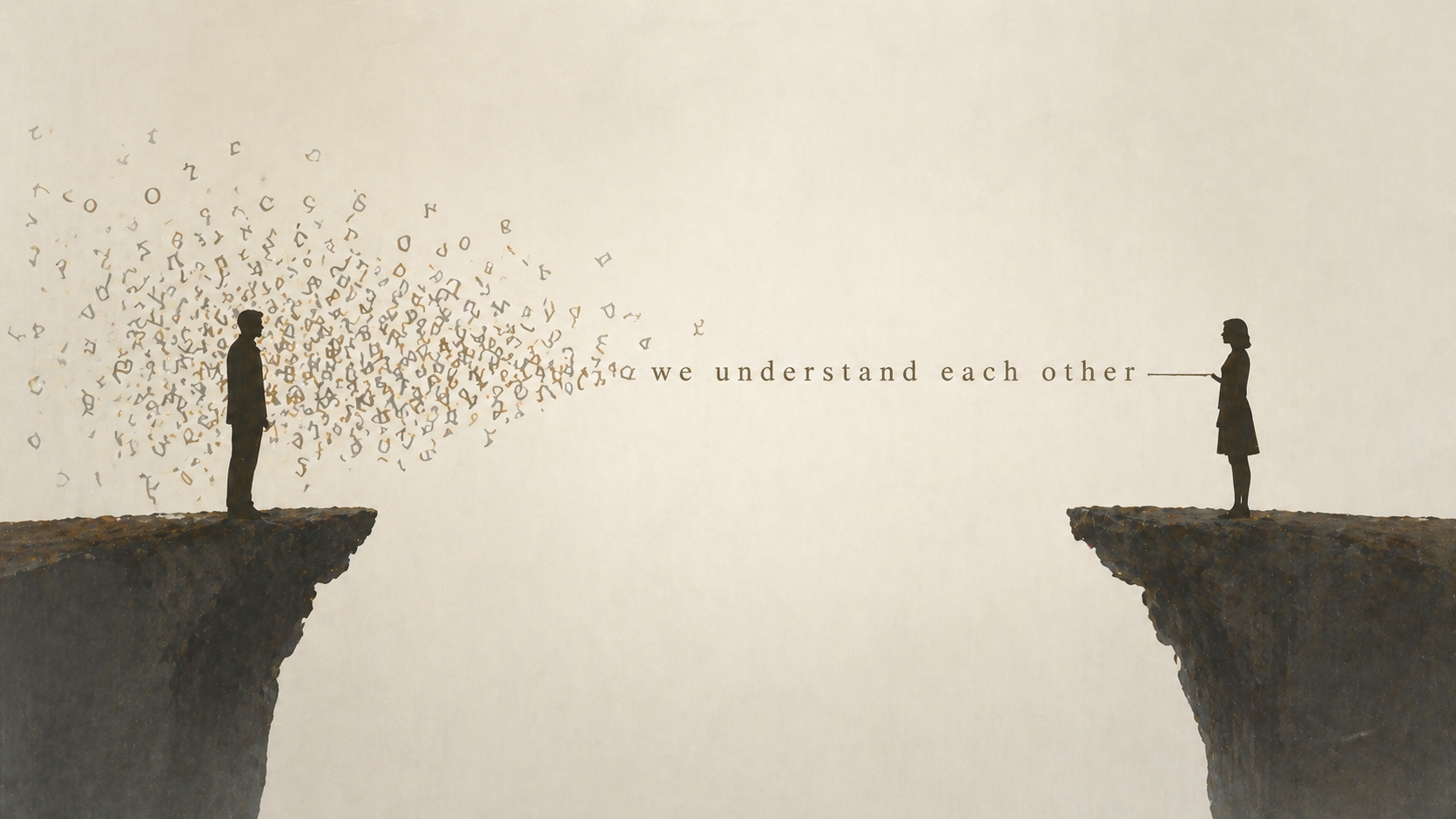
Every sentence is an attempt to connect one mind to another, and grammar is what makes that connection possible. Sometimes the attempt fails because the words are not enough, or because the structure hides what the speaker meant to reveal, or reveals what the speaker meant to hide. Without grammar, the attempt barely begins; with it, isolated words become shared meaning, language gains direction, weight, and shape, and the sentence finally works.
That is the closure grammar deserves. It is not boring because it lacks importance. It became boring because it was too often taught without its purpose. Once we return it to meaning, grammar stops being a list of punishments and becomes what it always was: the quiet structure that lets language reach someone else.
Source Note
This post is based on the prepared article notes and briefing materials about grammar, meaning, child language development, syntax, morphology, pragmatics, and David Crystal’s Making Sense: The Glamorous Story of English Grammar (2017). It also draws on the distinction between prescriptive grammar and descriptive grammar, the historical “Latin trap,” and the idea that grammar is best understood through both structure and use.