
The language you were taught is not the whole language
What we call “correct English” is a narrow slice of something much larger. It feels stable because it is standardized, taught, tested, edited, and repeated. But stability is not the same as permanence.
English changes constantly. Not randomly, and not only when new slang appears online. It changes through everyday use: through classrooms, books, work, migration, accents, jokes, mistakes, habits, and correction.
Variation is not a failure of the system. Variation is the system.
When something sounds “wrong,” it is often because it does not match the version of English we expected to hear. That does not always mean it is meaningless or broken. It may belong to another dialect, another register, another generation, or a change still in progress.
A language that stops changing does not become pure. It becomes dead.
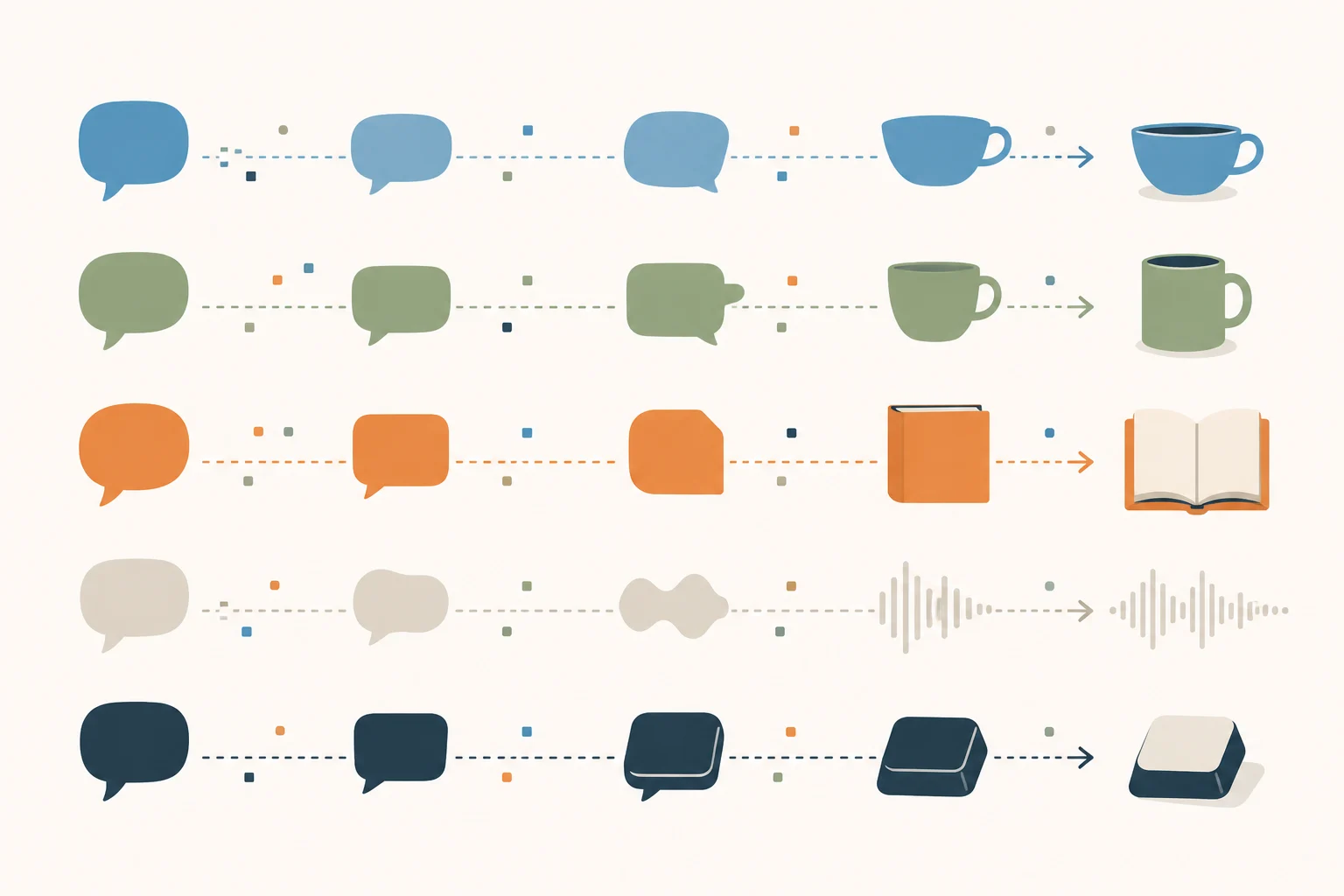
A cup is social. A mug is material.
The difference between a cup and a mug is not only shape. It is also history and social use.
Cup began as a general word for a drinking vessel. Over time, it narrowed and gathered cultural associations. In English, a cup of tea is not just an object filled with liquid. It can suggest a pause, a visit, a routine, a social gesture.
Mug stayed closer to the physical object. It points to the thing you hold: sturdy, practical, ordinary. A mug belongs more easily to work, kitchens, desks, and daily use.
By the eighteenth century, the distinction had become social. The teacup, often with a saucer, suggested refinement and ritual. The mug suggested practicality and common use.
The difference still lingers. We are not only choosing between two objects. We are choosing between two ways of framing the same act.
“You’re welcome” did not begin as customer-service language
There is a common assumption that you’re welcome is a modern polite formula, shaped by service culture.
It is older than that.
The phrase began closer to hospitality. To be “welcome” meant to be received, accepted, or invited in. Over time, that older sense shifted into a response to thanks. What once pointed to arrival and acceptance became a polite way to close an exchange.
This is how expressions often change. They do not always disappear and get replaced. Sometimes they stay, but their function moves.
A phrase can begin as greeting, become hospitality, then settle into politeness. What feels modern may be an older expression wearing a new social role.
Some “rules” were never rules
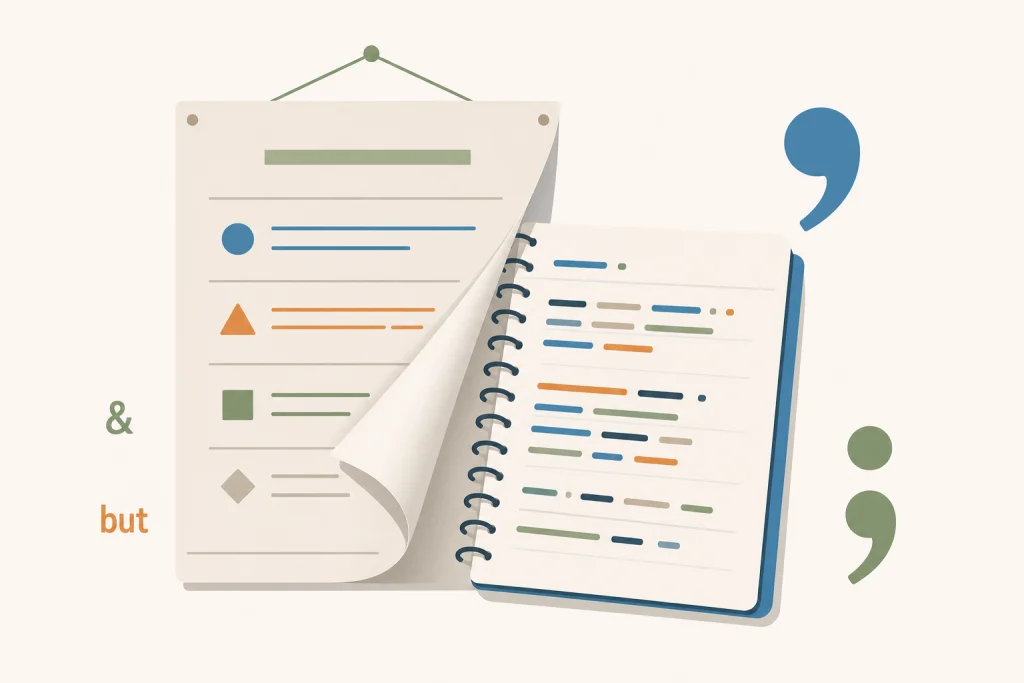
The rule against starting a sentence with and or but is one of the most familiar examples of school grammar becoming stronger than grammar itself.
The problem did not begin with the words. It began with overuse. Teachers wanted students to stop writing exactly as they spoke, so they discouraged sentence openings that sounded too loose or repetitive. Over time, a classroom correction hardened into a supposed rule.
But writers have always used and and but at the beginning of sentences. They use them because they work. And can extend a thought. But can sharpen a turn. Both can create rhythm, contrast, and emphasis.
The question is not whether a sentence may begin with a conjunction. It can. The question is whether the choice serves the sentence.
English does not protect its borders
English grows by taking things in.
It began as a Germanic language, but its vocabulary has been reshaped by Latin, Norse, French, Greek, and many other languages. Contact did not leave English untouched. It layered the language.
That layering gives English one of its most recognizable features: choice. You can ask, question, or interrogate. The meanings overlap, but the tone changes. One feels plain. One feels formal. One feels technical or official.
This flexibility is not accidental. It is the result of centuries of contact, conquest, trade, migration, education, and adaptation.
English does not grow by keeping itself clean. It grows by absorbing what speakers find useful.
“Ish” is a shortcut for uncertainty
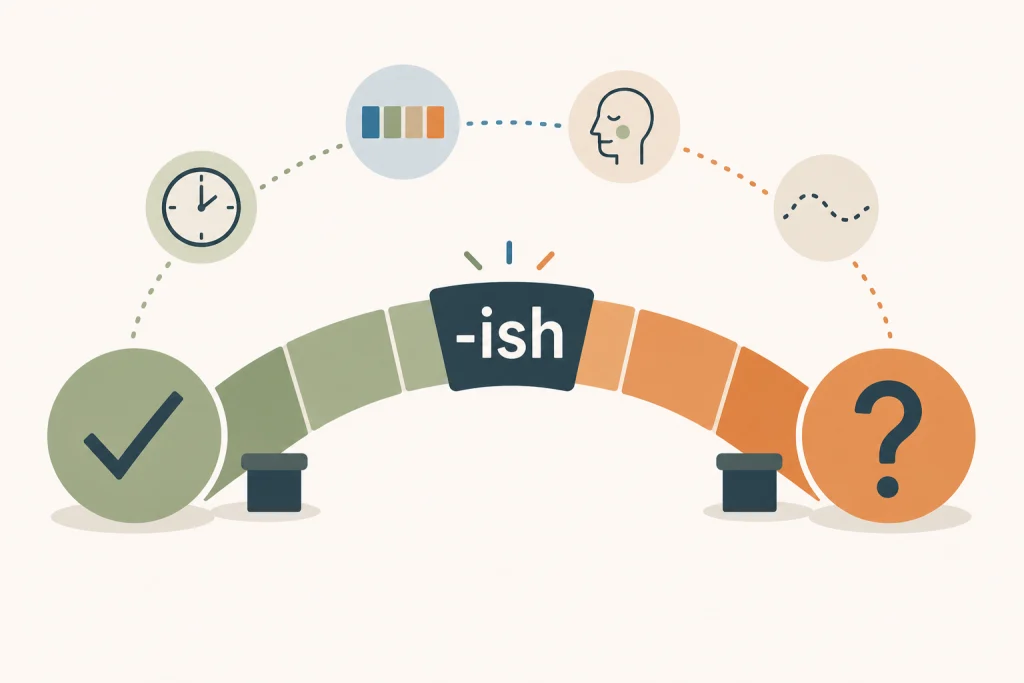
The suffix -ish began as a small modifier. It softened adjectives: bluish, reddish, greenish.
Then it expanded. It began to soften numbers and time: eightish, thirty-ish, sevenish. Now it can even stand alone.
“Are you coming?”
“Ish.”
That tiny answer says a lot. It means maybe, partly, probably, not exactly, not fully committed. It gives the speaker room to avoid precision without breaking the conversation.
This is not laziness. It is a social tool. People often need language that is softer than yes or no, looser than exact time, less final than certainty. English adapts to that need.
You are part of the system
English is not maintained only by dictionaries, schools, publishers, or exams. It is maintained by use.
Every speaker makes choices: formal or casual, direct or softened, standard or local, precise or approximate. Most of these choices do not change the language on their own. But repeated across millions of speakers, they create pressure. They normalize patterns. They move expressions from the edge toward the center.
The internet speeds this up. Dialects and registers that were once separated now appear beside each other every day. A phrase can move from a small community into public use quickly. Differences become visible, shared, mocked, copied, corrected, and eventually accepted.
What we call “standard” is not the whole language. It is the part that has stabilized for now.
English is negotiated every time it is used
English is not fixed in the way a table is fixed. It is closer to a social agreement that must be renewed constantly.
A teacher, a student, a novelist, a customer, a programmer, a teenager, a journalist, and a second-language speaker may all use English differently. None of them owns the language completely. Each one enters it, adjusts to it, and changes it slightly through use.
That is why “correct English” is never the full story. Correct for what? For an exam? A poem? A WhatsApp message? A legal document? A classroom? A joke? A job interview?
English does not live in rules alone. It lives in situations.
Every time we speak or write, we choose from what the language has made available to us. We inherit it, but we also handle it. We repeat old forms, bend them, avoid them, revive them, or turn them into something else.
That is not a weakness. That is how the language stays alive.
Source Note
This post is based on prepared notes about English variation, language change, usage, borrowed vocabulary, and shifting expressions such as “you’re welcome,” “cup,” “mug,” and “-ish.” It also draws on broader ideas associated with David Crystal’s work on English as a changing, social, and global language.