
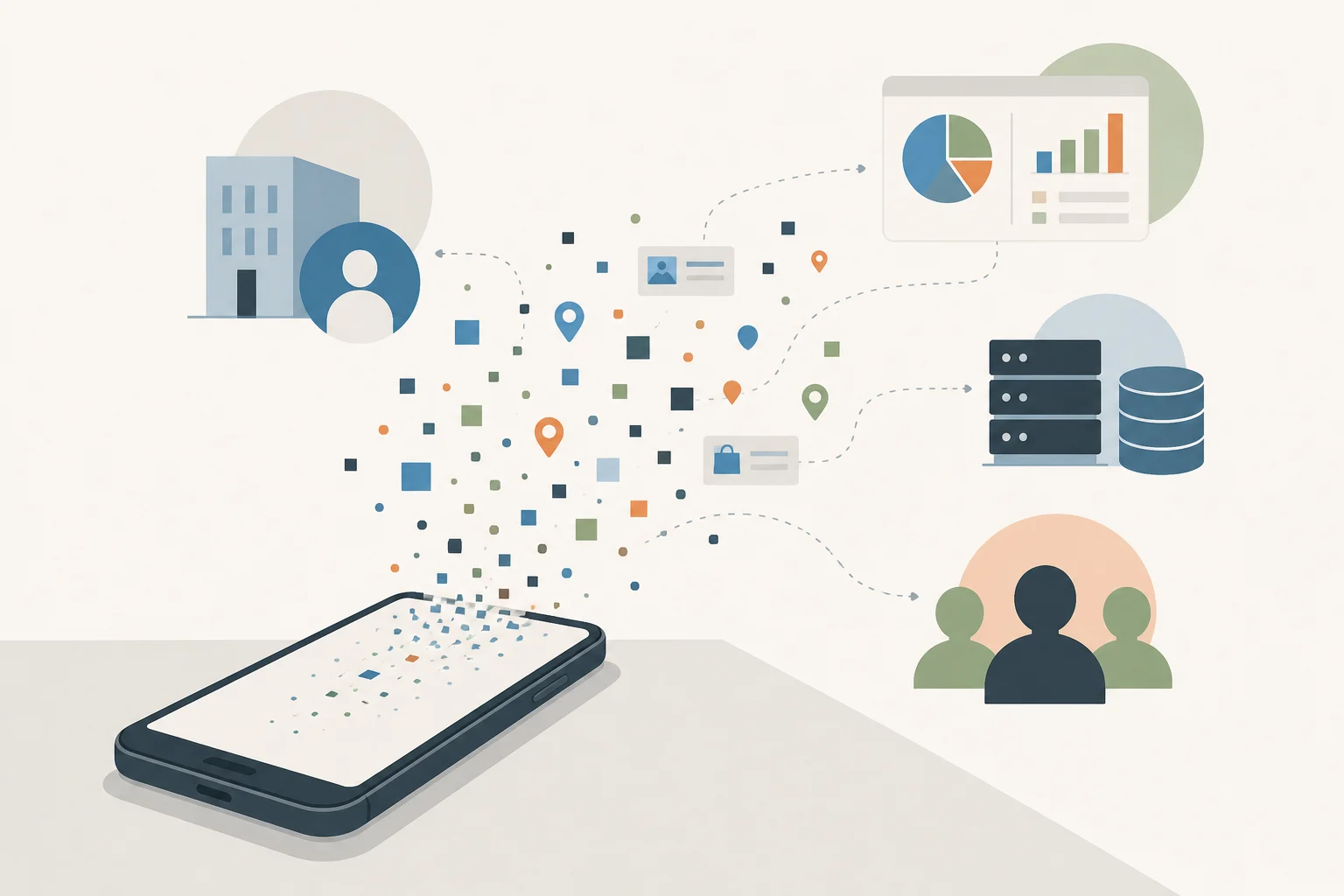
The phone in your pocket is part of a market
Most people do not think of app permissions as economic transactions. We download an app, accept the terms, allow access to location or identifiers, and move on. No money changes hands, so it feels free. But the documentary shows that this is where the business model begins.
Many apps are built around a simple exchange: the user gets a service, while the company receives data. That data may include location signals, device identifiers, usage patterns, or information produced while the app is open or running in the background. For the user, these details often feel too small to matter. For companies, they become valuable when collected at scale.
Once gathered, this data can be analyzed, combined with other datasets, packaged for advertisers, passed through analytics networks, or sold through data brokers. A single user’s movement may seem ordinary, but millions of movements create a market. Routes, routines, visits, habits, and repeated locations become information that can be priced, traded, and used to build profiles.
The documentary shows how mobile apps collect precise location data, device identifiers, and behavioral signals, then pass that information into a chain of companies most users have never heard of. The result is a marketplace where movement becomes inventory.
This is not about blaming users for using apps. It is about understanding how companies turned ordinary digital behavior into a business model.
What the documentary reveals
The central argument of the documentary is simple and disturbing: everyday apps are entry points into a global data supply chain. What appears to be a harmless tool on the surface is part of a broader system of tracking, aggregation, analysis, and resale.
The documentary traces how location data, even when presented as anonymous, can still reveal people with alarming precision. A dot on a map is not just a dot when it appears every night at the same address, travels every morning to the same office, and returns regularly to the same private places. An advertising ID may look abstract, but repeated behavior creates a pattern. That pattern can point back to a real person.
This is where the documentary becomes more than a privacy warning. It shows how separate data points become context. Home, work, regular stops, sensitive visits, social habits, daily routines: each point may look limited on its own, but together they reduce the distance between an anonymous profile and a real person. The phone does not need to reveal everything directly. It only needs to record enough repeated signals for others to make the connections.
Where consent becomes unclear
One of the most unsettling parts of this subject is that much of the data economy does not operate like a thief breaking a window. It operates through permissions, contracts, interfaces, consent banners, software development kits, advertising exchanges, and privacy policies swollen with language almost no one reads.
This is not the absence of procedure. It is procedure designed to exhaust attention. In a fast-moving world, it is absurd to expect every user to stop, read, understand, and compare lengthy terms of use and privacy policy agreements every time they install an app, open a service, or try a new piece of technology. That expectation creates the perfect hiding place for data brokers: the important details are technically disclosed, but buried inside documents almost no ordinary user has the time, patience, or legal vocabulary to read properly.
A user taps “allow,” and that gesture is treated as meaningful consent. But even if the user somehow read and understood the terms of use and privacy policy, what kind of consent is it when they still cannot realistically know where the data will go, how many companies may touch it, how long it will remain useful, or what it might reveal when combined with other datasets? Consent becomes less like understanding and more like permission granted inside a system whose full consequences remain outside the user’s view.
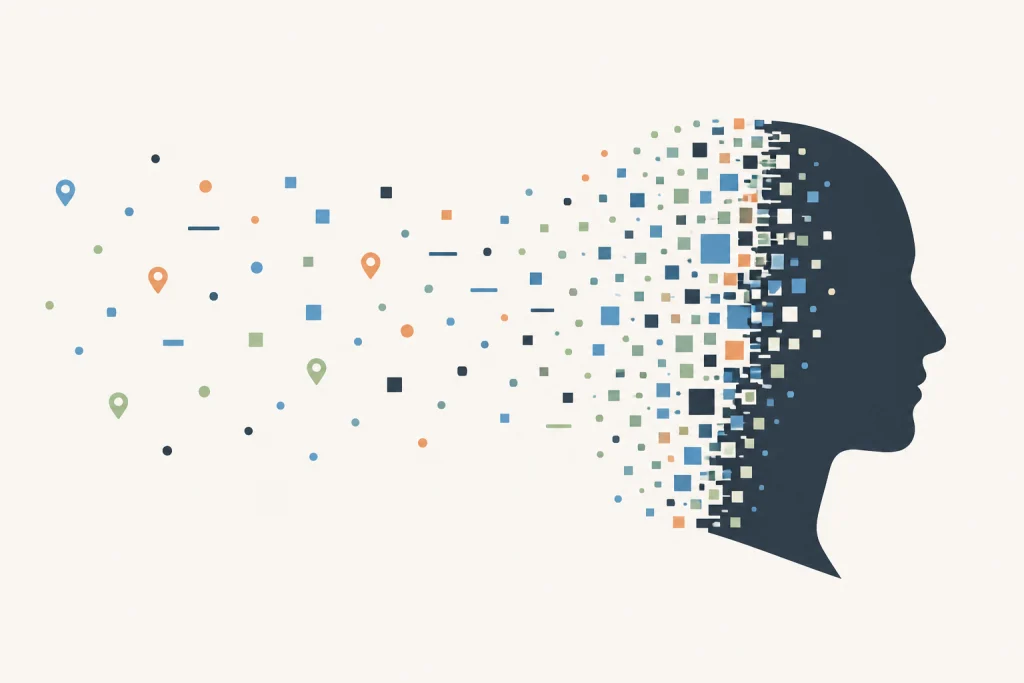
Data brokers turn fragments into profiles
Data brokers sit at the center of this system. Their work is not merely to collect information, but to arrange it, enrich it, connect it, and make it commercially useful. They specialize in turning fragments into profiles.
This is where the language of “anonymous data” begins to collapse under pressure. A fragment may be anonymous in isolation, but fragments do not remain isolated. They gather. They overlap. They point back toward the person who produced them. The danger is not limited to targeted advertising, although advertising is often the polite mask worn by the industry. The deeper issue is power. Whoever can map movement can infer vulnerability. Whoever can infer vulnerability can influence, exclude, manipulate, expose, or threaten.
This is why the documentary matters. It refuses to treat privacy as a luxury concern for people with something to hide. Privacy is not secrecy. Privacy is the ordinary human right to move through the world without being silently converted into a dossier.
The harmless app is the perfect disguise
The most effective machinery rarely announces itself as machinery. It arrives as convenience.
A dangerous app does not have to look sinister. It can look cheerful, useful, forgettable. It can tell you the weather, entertain your child, measure something trivial, or perform one small service while allowing other actors to harvest something more valuable in the background.
The bargain is presented as harmless because the app is harmless. But the app is not the whole bargain. The hidden bargain is with the ecosystem behind it. The system does not demand fear. It asks for habit. It survives because the extraction is small enough to ignore and constant enough to matter.
Why watching the documentary is worth your time
Reading about this issue can explain the architecture, but the documentary makes the invisible market visible. It does not simply tell us that apps collect data. Most people already suspect that. It follows the data outward, into brokers, buyers, legal gray zones, and security implications. It shows how ordinary digital behavior becomes raw material for a market most users never see.
You should watch the documentary not because it offers a neat escape plan. It does not. The point is to understand the scale of the machine: the brokers, permissions, databases, and quiet transactions that make modern convenience feel free while someone else keeps the invoice.
Watch the full documentary
This post only sketches the architecture of the issue. The documentary gives it evidence, scenes, voices, and consequence. It is worth watching in full, especially if you have ever assumed that a simple app could not possibly know enough to matter.
Watch DW Documentary’s Dangerous Apps, In the Web of Data Brokers here:
After watching it, the question is not whether your phone is useful. Of course it is useful. The question is useful to whom, and at what cost.