
The obvious story is not the whole story
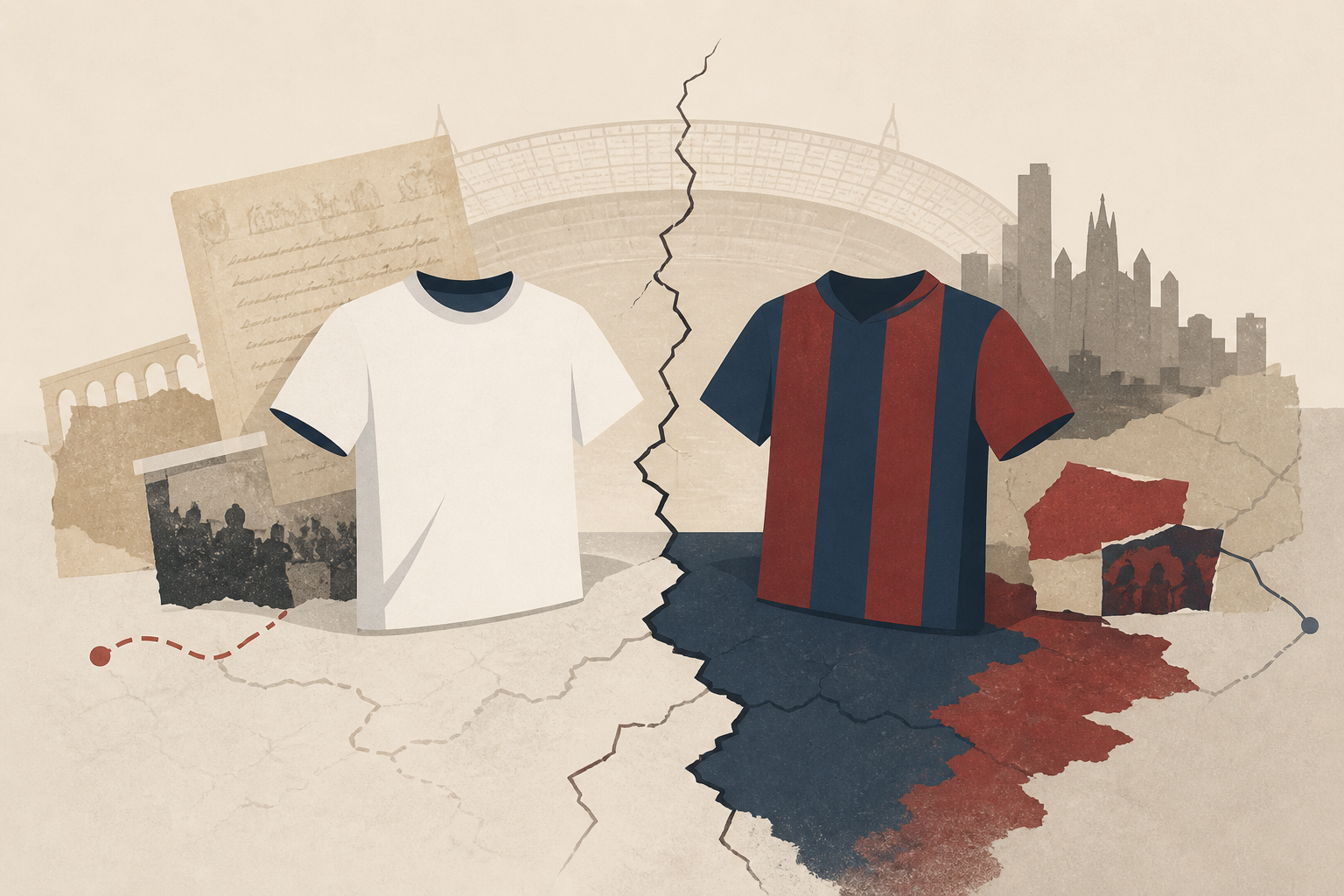
The obvious thing about El Clásico is that it is not just football. Everyone knows this, even people who do not follow Spanish football closely. Real Madrid against FC Barcelona arrives already loaded: Madrid and Barcelona, capital and region, white and blaugrana, the state and Catalonia, power and resistance.
That is the familiar frame. It is also the frame that makes the rivalry so easy to sell. A football match becomes a political drama with two shirts, two cities, two histories, and two moral positions.
But the closer we get to the history, the less obvious the obvious becomes.
The rivalry is not less political than people say. It is more complicated than the version usually repeated. Real Madrid was not simply born as Franco’s club. Barcelona was not only a pure symbol of resistance. Both clubs were marked by the Spanish Civil War. Both had Republican wounds. Both were forced to survive through fear, compromise, reinvention, and selective memory.
This is where Sid Lowe’s Fear and Loathing in La Liga becomes useful. It does not flatten El Clásico into propaganda or dismiss its political weight. It shows how the rivalry was built from real wounds, later myths, and the uncomfortable process by which some memories were preserved while others were buried.
The danger of a clean story is that it makes history easy to chant. It arranges the past into teams. It gives politics the shape of a scoreboard. It tells us who the villains are, who the victims are, and where memory should stand.
But history rarely behaves so politely.
The clean divide does not hold
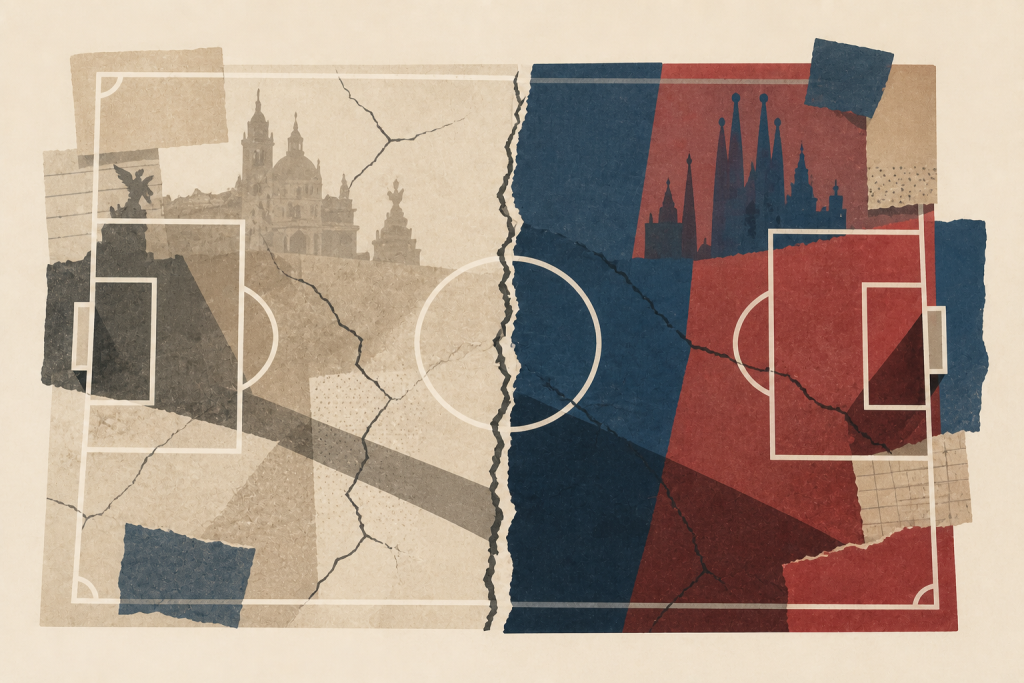
The familiar version says Madrid represented the regime while Barcelona represented resistance. That version is not entirely invented, but it is incomplete enough to mislead.
During Franco’s dictatorship, Real Madrid’s European success became useful to the regime. A victorious Madrid could be presented abroad as proof of a modern, disciplined, successful Spain. Football gave the dictatorship a polished surface.
Barcelona carried a different burden. In a Spain where Catalan language and identity were suppressed, the club became one of the few public spaces where Catalan feeling could gather. Més que un club was not only a slogan. It became a way of describing what the club meant when identity had to speak carefully.
So yes, the political reading matters.
But the Civil War complicates it. Madrid was not always the comfortable image of central power. At the outbreak of the conflict, Madrid became one of the major symbols of anti-fascist resistance. The cry of ¡No pasarán! belonged to the defense of Madrid against Franco’s advancing forces.
To reduce Madrid to “the regime” is to erase the Madrid that resisted the regime.
And that is the first myth behind El Clásico: the belief that cities and clubs can be morally frozen forever.
Two presidents, two ghosts
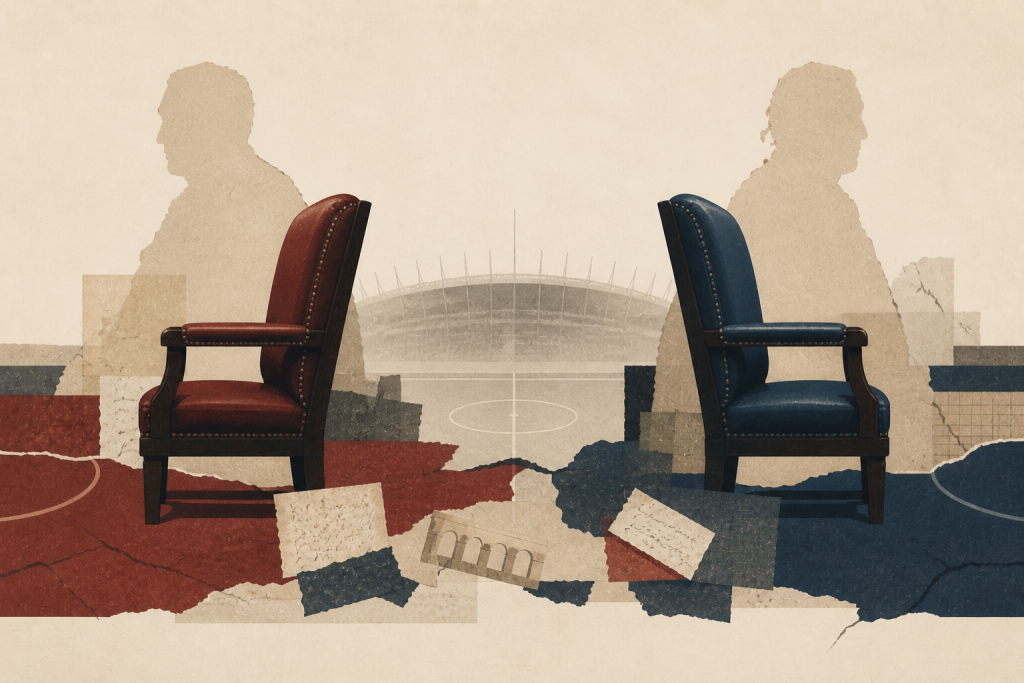
The tragedy becomes clearer in the stories of Josep Sunyol and Rafael Sánchez Guerra.
Sunyol, president of FC Barcelona, was a Catalan Republican who believed sport and citizenship belonged together. In 1936, he crossed into Nationalist territory near the Guadarrama front and was executed by fascist troops. His death became one of the great wounds in Barcelona’s memory. He became the martyr president, the figure whose death could stand for the club’s suffering under fascism.
But Real Madrid also had a Republican president.
Rafael Sánchez Guerra, Madrid’s democratically elected president, remained loyal to the Republic during the war. He stayed in Madrid during the siege, served the Republican side, was imprisoned after Franco’s victory, and eventually went into exile.
His story disturbs the simple myth. If Real Madrid was naturally Francoist, where does Sánchez Guerra fit?
He does not fit, so the myth leaves him out.
This is how political memory works. It does not only remember. It selects. Sunyol became central to Barcelona’s moral identity. Sánchez Guerra became harder to place inside Madrid’s post-war image. One ghost was useful to memory. The other made memory uncomfortable.
The rivalry is not only made of what happened. It is also made of what was preserved, what was forgotten, and who benefited from the forgetting.
Survival was not purity
Another myth imagines football clubs as pure moral actors, as if institutions inside a civil war could simply choose virtue and remain untouched by chaos.
The reality was more human.
Both Barcelona and Madrid faced threats from more than one direction. In Republican zones, football clubs could be viewed by some revolutionary groups as bourgeois institutions. They were vulnerable to seizure, control, or dissolution.
So both clubs used a strange survival tactic: auto-incautación, or self-confiscation. Employees and loyal members effectively “seized” their own clubs before more hostile forces could do it.
The clubs stole themselves in order to survive.
That detail matters because it disrupts the neat opposition. Both institutions were navigating danger. Both were trying to preserve themselves in a Spain where politics entered every office, stadium, dressing room, and silence.
Later memory preferred contrast to symmetry. It preferred eternal enemies to parallel survival.
The 11-1 became a wound
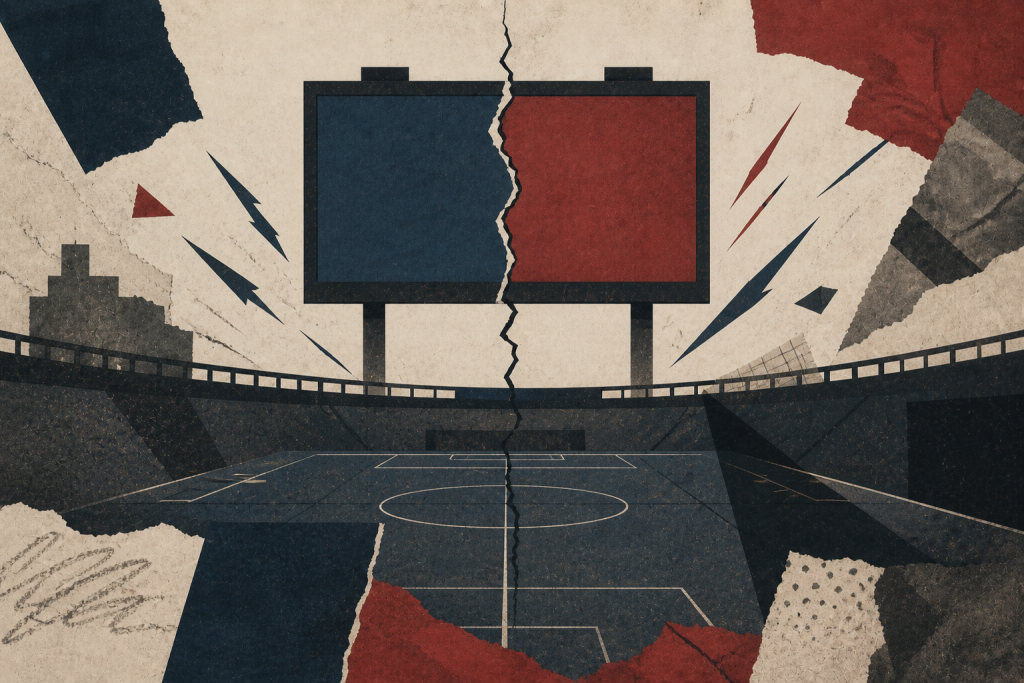
If one match hardened the political mythology of El Clásico, it was the 1943 Copa del Generalísimo semi-final.
Barcelona had won the first leg 3-0. The second leg in Madrid became something else entirely. The atmosphere at Chamartín was hostile, pressured, and politically charged. Barcelona lost 11-1.
That scoreline still hangs over the rivalry.
For Barcelona supporters, the match became more than a defeat. It became evidence of humiliation under power. The result entered memory as a political wound, not simply a football result.
This is where fact and myth begin to fuse. Even when details are debated, the emotional force of the event remains. The 11-1 gave grievance a number. It turned resentment into a scene that could be inherited.
Supporters who never saw the match can still feel its meaning because football memory is hereditary. It moves through stories, chants, families, colors, and repeated anger.
That is part of El Clásico’s power. It makes the past feel present, even when the present only partly understands the past.
Forced peace was still performance
After the 11-1 scandal, the regime understood that football passion could become dangerous when it was too openly regional or political.
So came rituals of forced harmony: banquets, staged gestures, gift exchanges, choreographed brotherhood.
Gold watches. Cigarette lighters. Silver vases.
The objects sound harmless, but they decorated a political performance. The dictatorship wanted rivalry to exist only inside a larger image of national unity. Local passion could be tolerated if it bowed before the state.
This was not reconciliation. It was theater.
Authoritarian power does not always crush culture. Sometimes it stages it, edits it, and applauds itself from the front row.
Kubala and the contradiction of usefulness
László Kubala adds another contradiction.
A refugee from Communist Eastern Europe, Kubala became useful to Francoist propaganda. His story could present Spain as a refuge from communism, a place of peace against the supposed tyranny of the East.
But Kubala was not only propaganda. He was also a football genius.
His arrival transformed Barcelona, expanded its support, and helped create the demand that eventually led to the Camp Nou. The regime could use his story, but it could not fully control what he meant to the people watching him.
That is the paradox of football under power. The state may try to use the player, but the crowd may love him for reasons the state cannot govern.
Kubala strengthened Barcelona at the same time that the regime hoped to contain Catalan identity. Once again, the rivalry refuses simplicity.
The myth is not false. It is incomplete.
So what should we do with the familiar story of El Clásico as regime against resistance?
We should neither swallow it whole nor throw it away.
Real Madrid did become useful to Franco’s Spain. Barcelona did become a vessel for Catalan identity under repression. The rivalry did absorb dictatorship, censorship, centralism, and cultural humiliation.
But the story also consumes nuance. It turns Republican Madrid into Franco’s Madrid. It turns Barcelona’s wartime complexity into a single line of victimhood. It remembers Sunyol because his martyrdom strengthens the argument. It forgets Sánchez Guerra because his life makes the argument harder.
That is why El Clásico still matters. Not because it gives us a clean moral map, but because it shows how badly people want one.
In the stadium, nobody chants footnotes. The crowd needs symbols, heroes, enemies, wounds. Football becomes the place where history is simplified enough to be shouted.
But behind the colors, the truth remains darker and more interesting: both clubs were shaped by trauma, both were manipulated by power, and both survived by becoming larger than themselves.
El Clásico is not powerful because it is pure. It is powerful because it is contaminated by everything Spain could not resolve.
A timeline of wounds and myths
The rivalry did not acquire its weight from one event. It gathered it over time.
In 1936, Barcelona president Josep Sunyol was assassinated by fascist troops, becoming the club’s martyr president and a lasting symbol of Catalan Republican memory. In 1939, Real Madrid president Rafael Sánchez Guerra was arrested by the Francoist state and treated as a dangerous Republican, a fact that complicates the later image of Madrid as naturally aligned with the regime.
In 1943, Real Madrid’s 11-1 victory over Barcelona in the Copa del Generalísimo became one of the rivalry’s defining wounds. In 1953, the signing of Alfredo Di Stéfano shifted sporting power toward Madrid after a government-brokered compromise that Barcelona supporters would never forget. In 1968, the so-called Bottles Final ended with Barcelona winning in Madrid, and the phrase més que un club gained new force through Narcís de Carreras. In 1970, the Guruceta scandal at the Camp Nou turned a refereeing decision into a political protest. In 1974, Johan Cruyff’s Barcelona won 5-0 in Madrid, a result often remembered as symbolic of a changing Spain near the end of Francoism.
Later moments added new layers. Barcelona’s 1992 European Cup win at Wembley helped ease older fatalisms. Luis Figo’s return to Camp Nou in 2002 after joining Real Madrid turned betrayal into theater, complete with the infamous pig’s head. These moments did not all mean the same thing, but each added material to the rivalry’s memory.
El Clásico became what it is because football events kept attaching themselves to political feeling. A scoreline, a signing, a referee, a slogan, a transfer: each could become more than itself.
The rivalry remembers for us
Real Madrid and Barcelona are necessary enemies. Each gives the other scale, language, and shadow. Without Madrid, Barcelona’s defiance loses its central antagonist. Without Barcelona, Madrid’s grandeur loses its most intimate challenge.
They are not simple opposites. They are mirrors that dislike what they reveal.
That is why the rivalry endures. Not only because of Messi or Cristiano, Di Stéfano or Kubala, the Camp Nou or the Bernabéu, though all of them matter. It endures because it carries memory: politics, grief, propaganda, identity, resentment, and desire.
The myths behind El Clásico are not decorations added to the rivalry. They are part of the machinery that keeps it alive.
And maybe that is the final discomfort. We say we want the truth behind the myth, but part of us still needs the myth. Modern football, stripped of memory, can look like money in motion. El Clásico offers something older and more dangerous: the illusion that history can be settled by a goal.
It cannot.
But for ninety minutes, under the lights, with the old wounds breathing again, Spain pretends that it can.